Three years of member power

In January 2024, this team promised a Local driven by its members: an inverted triangle, with the membership at the top and the elected executive carrying out its will. This is what that promise has looked like in practice.

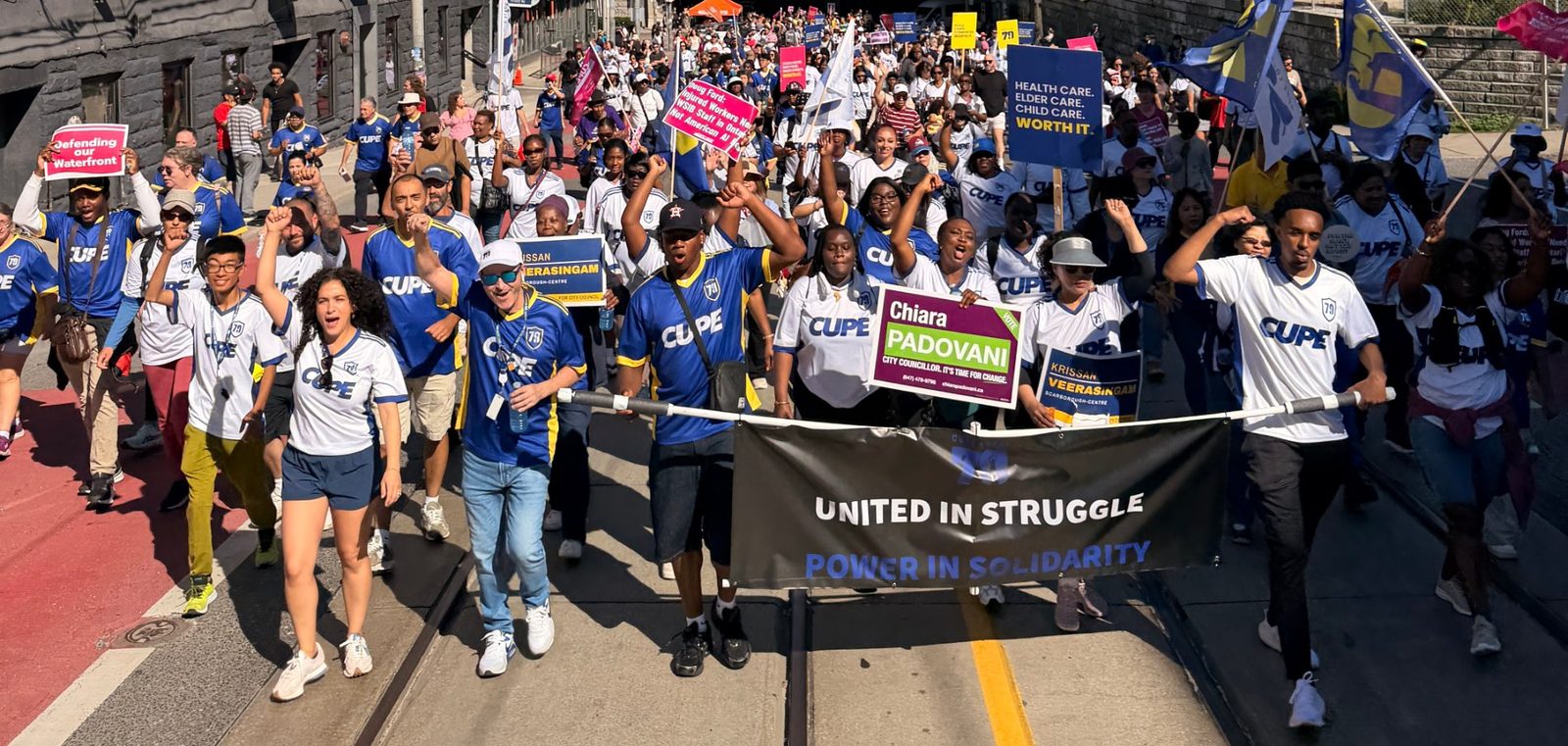
Local 79 members in blue and white jerseys marching together on Labour Day behind a United in Struggle, Power in Solidarity banner
Local 79 members marching together on Labour Day

The old way vs. our way

The difference between our way and the last few terms is clearest side by side.

Bargaining

The old way

A small, hand-picked bargaining team met the employer behind closed doors for weeks or months. Members saw the details for the first time when they were asked to vote on a tentative agreement.

Our way

For the first time in its history, Local 79 bargained in the open at the City, TCHC, TSHC and Hennick Bridgepoint tables. Bargaining updates went to the entire membership after every session, member-led focus groups shaped the WORTH IT campaign, and a rank-and-file organizing team grew to hundreds of volunteers.

Wages

The old way, 2012 to 2024

Everyone received the same percentage, with yearly raises between 0% and 2.25% and an average of 1.23% a year across three agreements. Previous administrations accepted that the lowest-wage workers would stay at minimum wage while everyone else got a raise.

Our way

Raises were weighted to lift the bottom up. Wage grades 1 to 9 received between 4.15% and 8.18%, and grades 10 and up received 3.95%. Minimum-wage work was eliminated for the first time in any Local 79 bargaining unit, 36 positions won special wage adjustments, and more than 2,000 full-time members received increases of 6% to 20% in the first year.

Average yearly base increase by City agreement, Full-Time and Part-Time Unit B
2012 to 2015
1.13%
2016 to 2019
1.25%
2020 to 2024
1.30%
2025 to 2028, our team
3.66%

Nearly three times the 1.23% average of the three agreements before it. The raises of 3.95%, 3.9%, 3.8% and 3% compound to a 15.47% higher base rate by January 2028, before targeted wage adjustments.

Member democracy

The old way, 2021 to 2023

Only 8 of 27 general membership meetings reached quorum, and 3 of those 8 were election meetings. Without quorum, the books were not reviewed, minutes were not approved and budgets were not presented for a vote.

Our way, 2024 to 2026

Every one of the 26 general membership meetings held this term has reached quorum, with an average of 332 members at each meeting. Every budget was presented and voted on by the membership, every expenditure was approved, and minutes were recorded at every meeting.

2021 to 2023

8 of 27 meetings reached quorum, 30%

2021 to 2023
JFMAMJSON
2021
2022E
2023EE

2024 to 2026

26 of 26 meetings reached quorum, 100%

2024 to 2026
JFMAMJSON
2024
2025
2026
  • Reached quorum
  • No quorum
  •  Election meeting

Quorum is at least 50 members and 10 Executive Board members. Without it, a meeting has no official record and cannot conduct the Local's business.

Member voices

The old way

Labour-management meetings were lagging, and most divisions had no regular meeting at all. Members' concerns rarely reached the managers with the power to act on them, and members had no say in what was raised.

Our way

We set terms of reference for labour-management meetings, and they are now held regularly in almost every City division and with almost every employer. This team introduced a divisional town hall ahead of every labour-management meeting, so members on the frontlines decide what goes to management.

  • 52divisional town halls this year, each one followed by a labour-management meeting
  • Everylabour-management meeting now has a town hall before it, where members set the agenda
  • 2×as many members signed up to the Member Portal

Finances

The old way

The Local was not financially compliant. There had been no internal or external audit in more than a decade, the financial by-laws were not available to members, and at meetings without quorum the books went unreviewed and budgets were not put to a vote. It was a period marked by financial scandal, including significant under-reporting of dues owing to CUPE National that resulted in a massive financial penalty.

Our way

This is the first leadership in recent years to open the books and make the financial by-laws available to every member. We expanded the trustee complement, completed the first internal and external audits in more than a decade, and report quarterly on the Local's investments. Meeting our audit requirements has kept the Local eligible for CUPE National cost-sharing, which has brought in more than $1.25 million.

Taking action together

When members act together, they win. This term, members took their fight to the streets, to City committees and boards and to the news, and this team organized and backed them every step of the way. Through television and radio interviews, newspaper and digital coverage and public commentary, we carried workers' experiences and demands to audiences across the city, earning millions of impressions over the term.

Over the term, this team also built a network of mutual support with community groups across Toronto, standing with them in their fights as they stood with members in ours. That network has helped push members' issues to the front of the City's political agenda.

Our members have been heard on CBC News, CTV News, Global News, CityNews, CP24, CPAC, the Toronto Star, TorontoToday and NewsTalk 1010, among others.

  • City of Toronto bargaining

    Low pay is driving workers away from City jobs

    At press conferences covered by CBC, CityNews, Global News and CTV, Nas Yadollahi laid out how inadequate pay is fuelling a recruitment and retention crisis at the City. Bargaining in the open, members carried that message into the WORTH IT campaign and made the case to the public that the people who keep this city running are worth it.

    • A second City bargaining press conference
  • Seniors Services and Long-Term Care

    Long-term care, wave after wave

    At Kipling Acres and Carefree Lodge, long-term care workers took to the streets to demand better working conditions. Backed by labour allies and workers across the city, their action drew coverage from CityNews, CBC, CTV News and the Toronto Star, and it worked. Long-term care members have kept up the pressure ever since through further waves of action, including petitions and letter-writing campaigns.

  • TCHC and TSHC, November 2025

    Housing workers vote to strike over wages and safety

    Toronto Community Housing and Toronto Seniors Housing workers voted to strike over wages and unsafe working conditions, and told CityNews and CBC why. A tenant services coordinator later took what frontline staff face straight to the TCHC Board of Directors.

    • CBC News Toronto
    • TCHC Board, July 2026
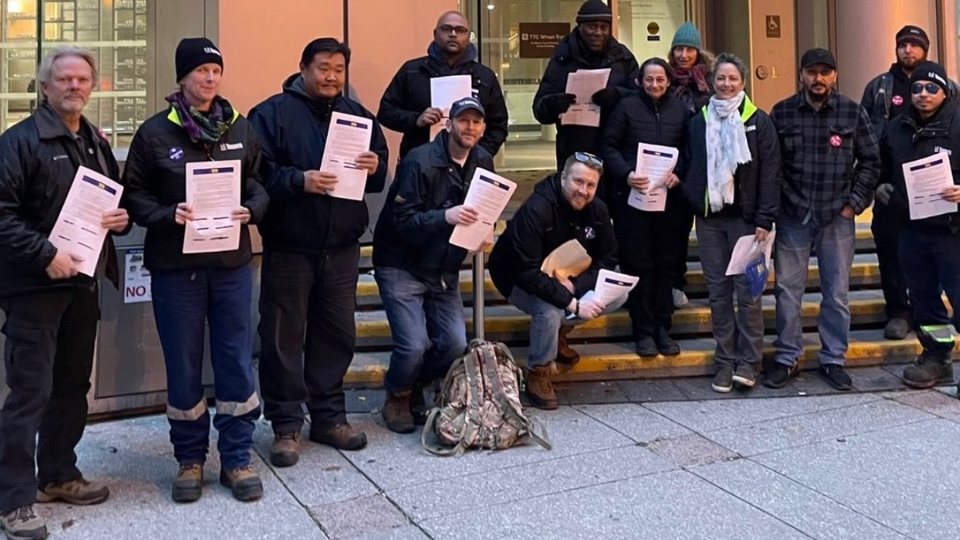
  • City workers holding papers outside a City of Toronto building

    Job evaluation

    Raises between bargaining rounds

    Members do not have to wait for the next contract to win a raise. Through worker-led campaigns and a far more robust use of job evaluation, members secured raises between bargaining rounds for Toronto Water workers, Adapted and Integrated Part-Time staff, Parks Forepersons and Historical Interpreters at the City, and for Toronto Service Coordinators, Accommodations and Transfers Analysts (formerly Intake Specialists) and Tenant Service Coordinators at TCHC and TSHC. When the TSHC Tenant Service Administrator role was evaluated, it moved up from pay grade 4 to pay grade 6.

  • Parks, Forestry and Recreation, summer 2025

    Aquatic workers walk out, and win

    Aquatic workers walked out in the summer of 2025, refusing unsafe work in extreme heat. Their action drew coverage on CP24, CTV and CityNews and led to improvements in workplace safety.

  • Toronto Public Health

    Public health nurses fight for pay equity

    Public health nurses took their fight for fair pay and safe staffing to the Board of Health, to City Council and to the Medical Officer of Health, and they are continuing their campaign throughout the 2027 budget consultations.

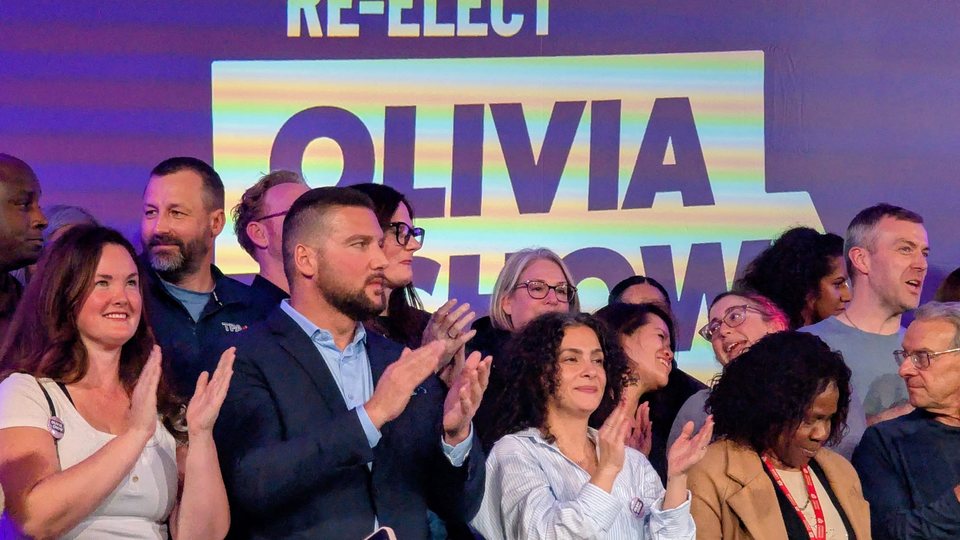
  • Local 79 members on stage at Mayor Olivia Chow's election night celebration

    Municipal election, fall 2026

    Making public work an election issue

    For the first time in Local 79's history, members invested in advertising that showed Toronto the value of public sector work and the services our members provide. Protecting public work became one of the major issues of the 2026 municipal election, and that investment put members' priorities at the centre of the campaign.

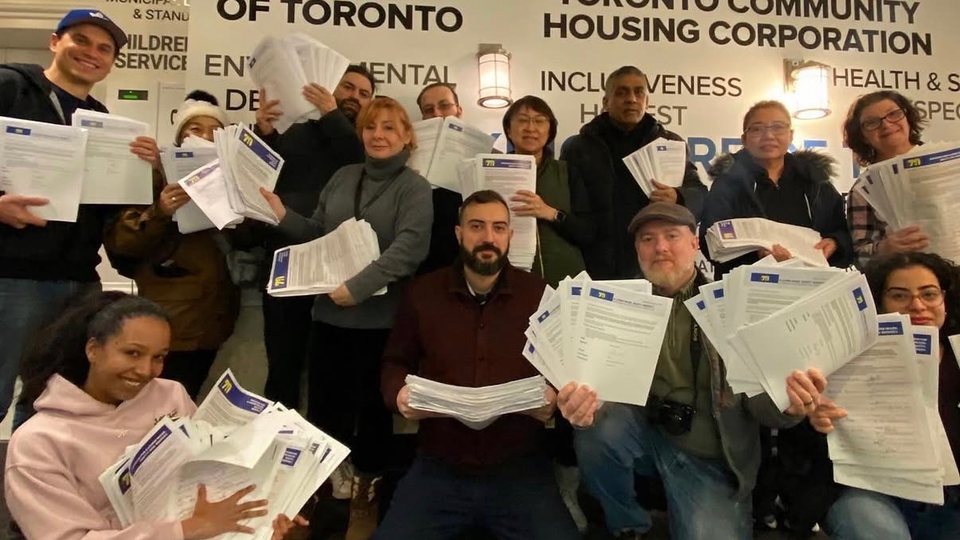
  • Local 79 members holding stacks of signed bargaining petitions in front of a City of Toronto and TCHC banner

    All four employers

    Petitions at every table

    Members took action through collective bargaining petitions at all four employers and in each of their bargaining rounds.

  • A Historical Interpreter in a period uniform wearing a button that reads Stop paying us like it's the 1800s, #worthit

    Every employer

    Button actions

    Members wore their demands to work in coordinated button actions across employers, often alongside petitions and meetings with divisional management. Actions like these make workers' concerns public and put pressure on management to meet with workers and seriously consider their demands.

  • May 22 and 23, 2026

    Toronto Workers Summit

    Members came together for two days to imagine a city where more of us can thrive, and created a vision statement that set the standard for how we evaluated candidates at our endorsement town halls for the municipal election. Members' endorsements helped elect a City Council that much more closely reflects the vision workers created.

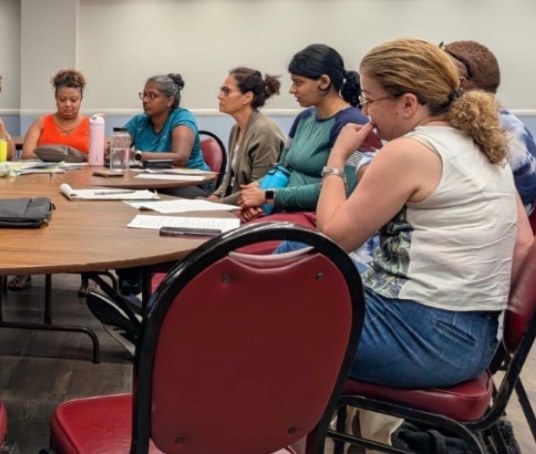
  • Children's Services workers around a table at an organizing meeting

    Children's Services

    Organizing wins a fair vacation policy

    During the City bargaining ratification vote, Children's Services members made clear that their unfair vacation policy had to change, and they were ready to organize to win it. Colleagues met regularly, attended organizing meetings, identified their coworkers by classification, made phone calls and held one-to-one conversations to build power and direct it at the people who could change the policy.

    More than 80% of workers in the division answered a union survey, giving their Unit Officer the evidence to show what the old policy cost them: summers missed with their children, holidays they could not take with family and constant stress about asking for time off. Senior management met directly with workers, Member Organizers and Local 79 Executives, and a new policy is now in effect for hundreds of workers.

    • Non-union supervisors no longer take members' vacation spots
    • The "red zones" around March Break, summer, December and PA Days are gone
    • Seniority now counts within each classification
    • Vacation allotments stay the same all year
    • Requests get answers on a clear, predictable schedule
Watch on YouTube

Vote Monday, November 23